Guidelines for submitting articles to San Pedro del Pinatar Today
Hello, and thank you for choosing San Pedro del Pinatar.Today to publicise your organisation’s info or event.
San Pedro del Pinatar Today is a website set up by Murcia Today specifically for residents of the urbanisation in Southwest Murcia, providing news and information on what’s happening in the local area, which is the largest English-speaking expat area in the Region of Murcia.
When submitting text to be included on San Pedro del Pinatar Today, please abide by the following guidelines so we can upload your article as swiftly as possible:
Send an email to editor@spaintodayonline.com or contact@murciatoday.com
Attach the information in a Word Document or Google Doc
Include all relevant points, including:
Who is the organisation running the event?
Where is it happening?
When?
How much does it cost?
Is it necessary to book beforehand, or can people just show up on the day?
…but try not to exceed 300 words
Also attach a photo to illustrate your article, no more than 100kb
PROPERTY SEARCH
article_detail
Date Published: 29/06/2026
Eleven drownings already recorded in Murcia before peak season even begins
The Region has already recorded almost as many drowning deaths as in the whole of last year
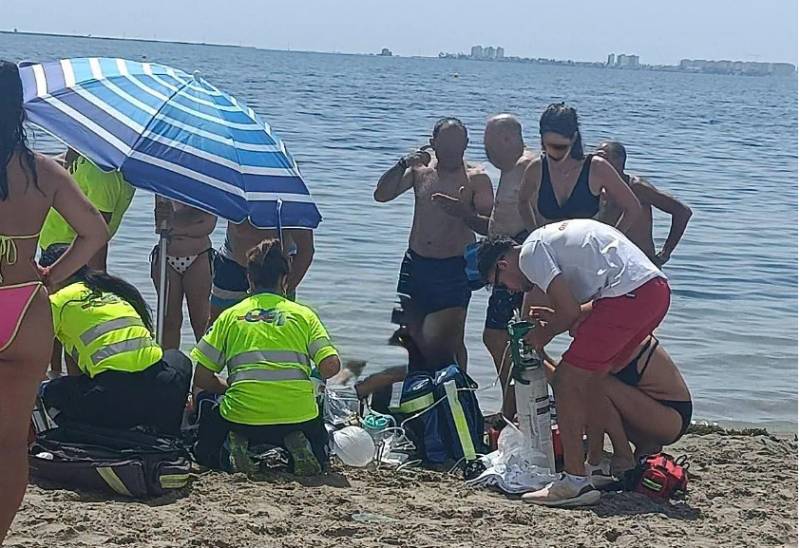
The number of drowning deaths recorded in the Region of Murcia this year has risen to 11 before the end of June, bringing the total close to the figure recorded during the whole of 2025 and raising fresh questions about whether beach surveillance measures are keeping pace with changing holiday habits.
The latest figures come as beaches across the Region have been packed for weeks thanks to soaring temperatures and an early summer heatwave. While the official high-season beach rescue operation doesn’t begin until July 1, thousands of residents and visitors have already been flocking to the coast throughout June.
Five drowning deaths were recorded up to the end of May, but six more people have lost their lives during the first half of June alone. With 11 deaths already recorded, the Region is now just two short of the 13 drowning deaths reported throughout the whole of 2025.
The most recent comparable year was 2024, when 19 people died in drowning incidents across the Region of Murcia, making it one of the deadliest years of the past decade.
The tragedies have occurred along much of the Murcian coastline. On June 8, a 54-year-old man died at Puntas de Calnegre beach in Ramonete. Two days later, a 25-year-old British man lost his life at Percheles beach in Mazarrón after reportedly striking his head on rocks while in the water.
Another fatality followed on June 14 when a 77-year-old man died at Rihuete beach, also in Mazarrón. Last week, a 22-year-old swimmer disappeared in a rocky area off Matalentisco in Águilas. His body was recovered two days later close to where he had last been seen.
On Sunday, a 35-year-old man died while bathing at El Portús beach in Cartagena. Just hours later, a 24-year-old man from Balsicas lost his life at Mil Palmeras beach in neighbouring Alicante province. The latest tragedy occurred on Monday when an 89-year-old woman died while swimming at Arenal beach in La Manga, between kilometres 8 and 10 in the municipality of San Javier.
The growing number of incidents has once again highlighted the gap between what many now consider the real start of summer and the dates used for seasonal beach safety planning.
Earlier this month, the regional government presented the 2026 Beach Surveillance, Rescue and Sea Rescue Plan, better known as the Copla Plan. The operation covers 250 kilometres of coastline across eight coastal municipalities, from San Pedro del Pinatar to Águilas.
This summer's deployment will involve almost 300 personnel operating across 81 beaches and 140 surveillance points. However, the highest level of cover is only activated during the plan's high-risk phase, which runs from July 1 until August 31. June and September continue to be classified as medium-risk months.
The Region allocates around €725,000 annually to the Copla Plan, with a further €188,113 used to maintain Red Cross rescue boats stationed in San Pedro del Pinatar, Cartagena, Mazarrón and Águilas.
Critics argue that the calendar no longer reflects reality. June has increasingly become a full summer month, with beaches crowded well before schools break up and before the traditional start of the holiday season. As temperatures continue to climb and more people head to the coast earlier each year, the debate over whether enhanced lifeguard coverage should begin sooner is likely to intensify.