Guidelines for submitting articles to San Pedro del Pinatar Today
Hello, and thank you for choosing San Pedro del Pinatar.Today to publicise your organisation’s info or event.
San Pedro del Pinatar Today is a website set up by Murcia Today specifically for residents of the urbanisation in Southwest Murcia, providing news and information on what’s happening in the local area, which is the largest English-speaking expat area in the Region of Murcia.
When submitting text to be included on San Pedro del Pinatar Today, please abide by the following guidelines so we can upload your article as swiftly as possible:
Send an email to editor@spaintodayonline.com or contact@murciatoday.com
Attach the information in a Word Document or Google Doc
Include all relevant points, including:
Who is the organisation running the event?
Where is it happening?
When?
How much does it cost?
Is it necessary to book beforehand, or can people just show up on the day?
…but try not to exceed 300 words
Also attach a photo to illustrate your article, no more than 100kb
PROPERTY SEARCH
PROPERTY SEARCH
article_detail
Date Published: 07/05/2026
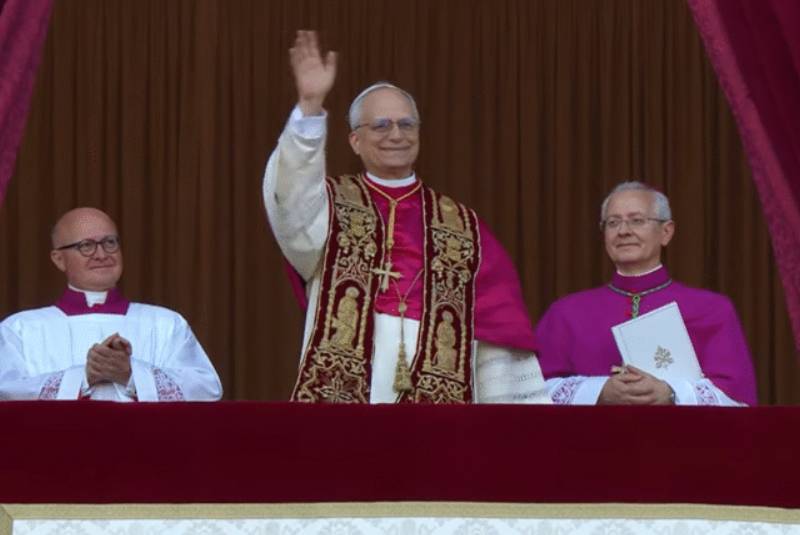
Spain prepares for Pope Leo XIV's landmark visit this June
The Pontiff will travel through Madrid, Barcelona, Gran Canaria and Tenerife on his 6-day trip
The Pontiff will travel across Madrid, Barcelona and the Canary Islands between June 6 and 12, taking part in huge public masses, meetings with political leaders and appearances at some of Spain’s most recognisable venues.
Among the standout moments are a historic speech inside Spain’s Congress of Deputies, a mass in Madrid’s Plaza de Cibeles and gatherings at major sporting venues including the Santiago Bernabéu, the Movistar Arena, Barcelona’s Olympic Stadium and Gran Canaria Stadium.
It will mark the first papal visit to Spain since Benedict XVI travelled to Madrid for World Youth Day in 2011. This time though, Pope Leo XIV is also making history by becoming the first Pope ever to address the Spanish Parliament.
In Madrid, Pope Leo XIV will meet King Felipe VI, Queen Letizia and Prime Minister Pedro Sánchez before addressing Parliament and holding gatherings with young people and the diocesan community.
The Barcelona leg of the trip includes prayer at the city’s cathedral, a vigil at the Lluís Company’s Olympic Stadium, a visit to Brians 1 prison and a mass at the Sagrada Familia where he will inaugurate the Tower of Jesus Christ.
The final stage of the visit focuses heavily on migration, with meetings planned in Gran Canaria and Tenerife before the Pope returns to Rome on June 12.
While the visit is undoubtedly being presented as a major spiritual and diplomatic event, the Pope’s appearances at sports venues and exhibition centres also revive a debate that has already caused political controversy in Spain.
At the time, the local PP argued that if a sports venue could not be used for car exhibitions, gastronomic fairs, book events or Catholic masses, then the same rules should apply to everybody regardless of religion.
Yet Pope Leo XIV’s itinerary highlights how blurred those lines often become in practice. Several events during his Spanish tour are due to take place inside venues primarily associated with sport or large-scale entertainment.
The meeting at the Movistar Arena is taking place inside one of Madrid’s best-known indoor sports arenas, while the diocesan gathering at the Santiago Bernabéu will be held inside the home of Real Madrid. Barcelona’s prayer vigil is scheduled for the Lluís Company’s Olympic Stadium and Gran Canaria Stadium will host one of the largest masses of the visit.
Even the IFEMA, where the Pope will meet volunteers before leaving Madrid, regularly hosts trade fairs, concerts and large public events rather than sporting fixtures.
That doesn’t necessarily contradict the Jumilla argument directly because the restrictions there specifically concerned a municipal sports centre rather than privately operated or multi-use national venues. Still, it inevitably raises questions about where authorities draw the line between sport, culture, entertainment and religion.
The reality is that modern venues rarely serve a single purpose anymore. Football stadiums host concerts, exhibitions and political rallies. Exhibition halls become vaccination centres or conference venues. Public squares transform into concert arenas and festival spaces. In that context, separating religion entirely from public multi-use venues becomes far more complicated than a simple yes or no debate.
For now though, attention is likely to remain fixed on the scale of the Pope’s visit itself. With masses planned in city centres, stadiums and some of Spain’s most iconic landmarks, authorities are already preparing for enormous crowds and major security operations across the country.