









Lorca, “The City of the Sun”, is one of those cities best enjoyed while taking a leisurely a stroll, rather than adhering to a strictly planned itinerary, as its heritage, its sights and the local cuisine are almost certain to put paid to any intention to “see it all” in a specific timeframe.
But on the other hand, there are plenty of general directions in which you probably ought to be strolling, and what follows is a selection of recommendations offered by the regional tourist board of Murcia to allow you to enjoy cultural, historical, architectural and culinary aspects of the city in just one day – although of course you’re welcome to stay and make it two days, with the local council having set up a scheme whereby you are entitled to two free guided tours if you stay the night in a hotel or other officially recommended tourist accommodation!
The embroidery museums of the Paso Azul and the Paso Blanco
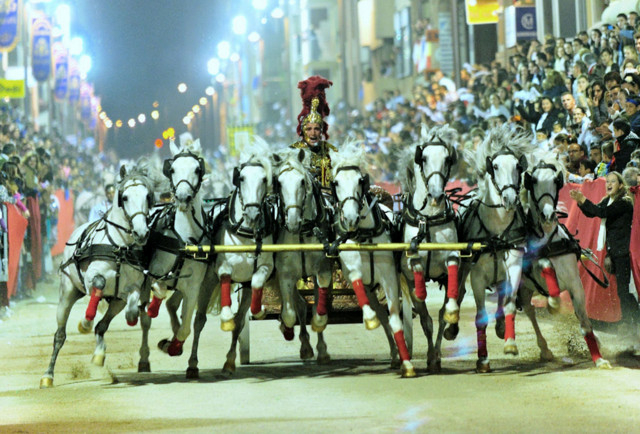
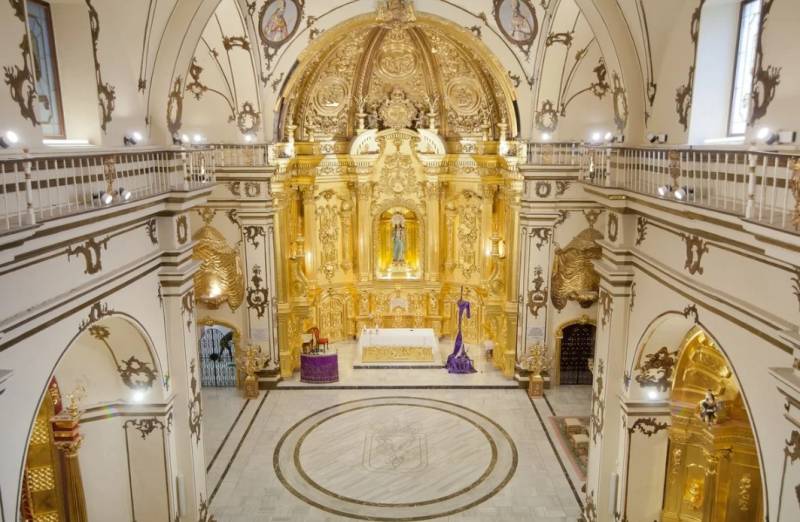 The Paso Azul and the Paso Blanco are two of the “brotherhoods” which take part in the internationally renowned Easter Week processions of Lorca, a spectacular parade with daredevil horsemanship and exquisite embroidered costumes as chariots hurtle down the main streets of the city in a fanciful reenactment of scenes from the Old Testament of the Bible.
Both of these brotherhoods run museums devoted to displaying their artistic heritage in the shape of the embroidery and other accoutrements which make the costumes worn unique. Come along and admire the images created out of silk and gold thread (along with many other colours, of course), decorating cloaks, flags and other items which make Semana Santa in Lorca far more than a religious occasion!
Along La Corredera and into the old city centre
From the museums, the suggested route follows Calle Corredera, one of the busiest and most important streets in Lorca. The surface is cobbled and shops line the street, making this a vital artery if not actually the living heart of historic Lorca.
The heart, perhaps, lies a few years north of Calle Corredera, and this is where we’re headed next…
The Plaza de España
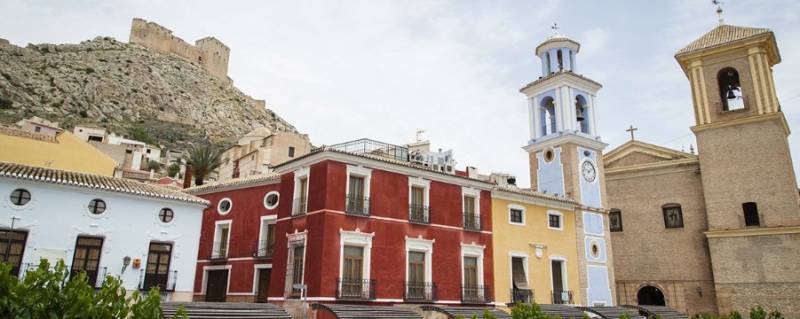
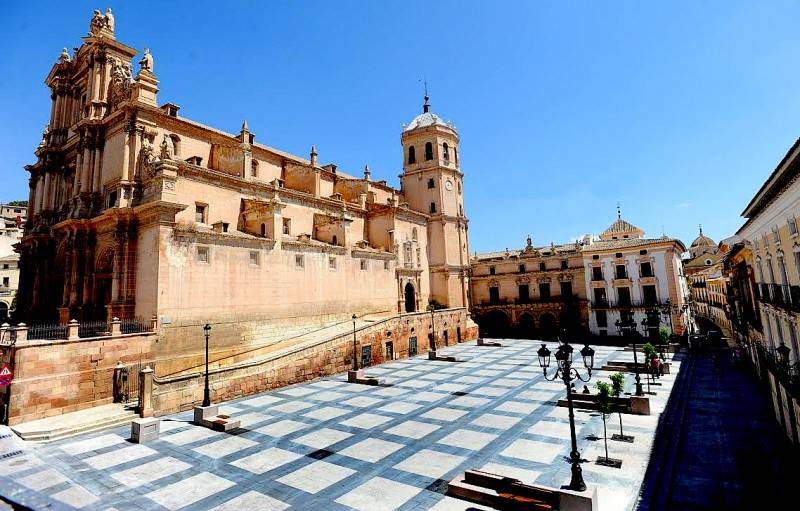 As you drift towards the Plaza de España – and you will inevitably gravitate in this direction no matter how many times you’ve seen the square before! – the atmosphere seems somehow older, more historic, and then you reach the magnificent buildings in the square itself. The largest of these is the former Collegiate Church of San Patricio, a massively imposing building with a fascinating history and plenty of curious details in the architecture, decoration and artwork.
Alongside it the impressive Casa Consistorial, The Town Hall, which is inside a baroque building dating from the 17th and 18th centuries and featuring a sombre stone façade, while other notable features around the square include the old “Pósito de los Panaderos”, a former bread and meat market now housing the local Artisans’ Guild.
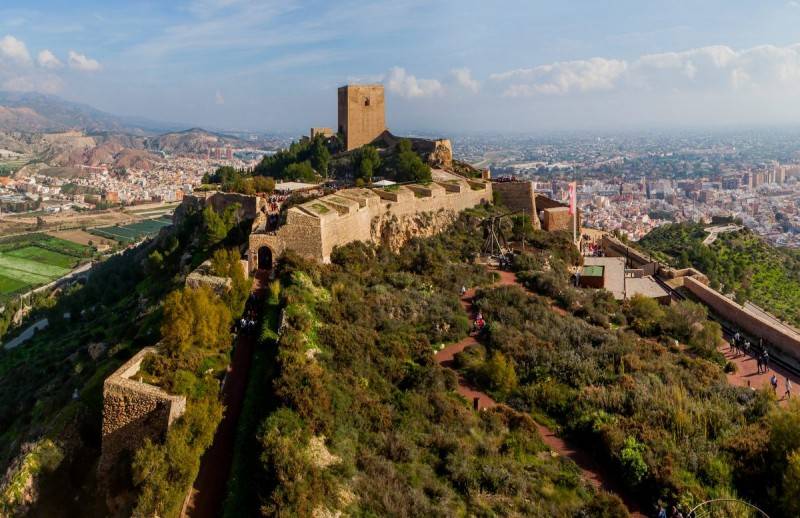
Lorca castle
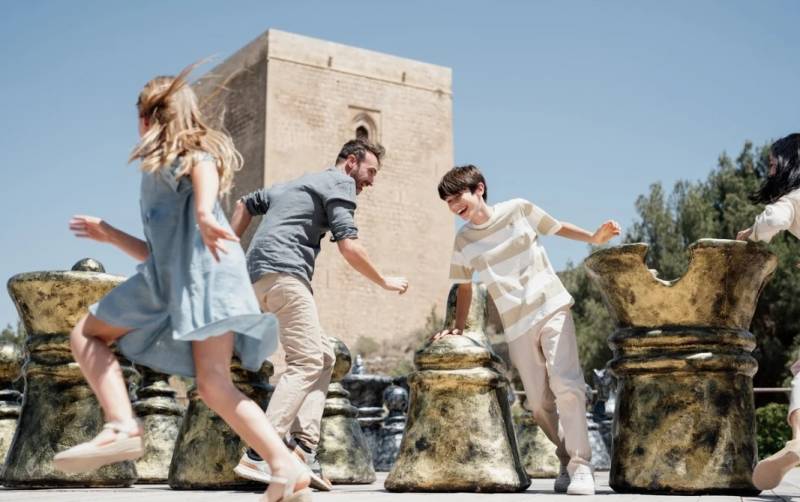 At some point during the day, you should make the effort to take in Lorca castle, “The Fortress of the Sun”. Originally built between the 11th and 13th centuries, once it was taken over by Christian forces in the 1240s it remained impregnable during the 250 years of skirmishes between Christian and Moorish Spain, during which Lorca was a stronghold in frontier territory due to its proximity to the Islamic kingdom of Al-Andalus.
The castle remained in military use until the 16th century and was again an important strategic location in the Peninsular War and the War of Spanish Independence (1808-14). These days there are a host of different tours and events held at the castle for both adults and children, and you can visit towers, keeps, water storage cisterns (vital in times of siege) and even the remains of the best-preserved medieval synagogue in Spain!
In addition, of course, the hilltop location of the castle gives us marvellous panoramic views over the city, the Guadalentín valley and the mountains beyond – what made the location perfect for defence in the Middle Ages makes it perfect for visitors in the 21st century!
The convent church of the Virgen de las Huertas
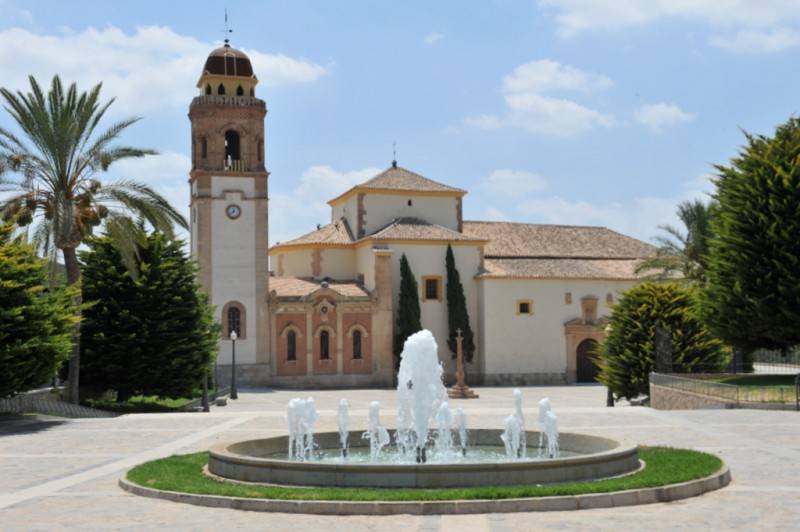 The Virgen de las Huertas is a manifestation of the Virgin Mary which is vital to the cultural identity of Lorca, as she appeared to Prince Alfonso of Castile (later King Alfonso X) as he was preparing to do battle while capturing the city from the Moors. This church dedicated to the Virgin was part of a convent belonging to the Franciscan Order, and inside it is still possible to see the remains of the caliph’s palace on top of which it was built.
This is in a quiet part of Lorca, on the “other” side of the large floodwater channel which runs through the city, and it might be a good spot to enjoy some lunch…
The local gastronomy
Although they don’t usually make specific recommendations for eating establishments, the tourist board does give a mention to Salones el Faroli, very close to the church of the Virgen de las Huertas. The menu here is based on typical Spanish cuisine using locally sourced produce and accompanied by a varied wine list.
A walk in the “Alamedas”
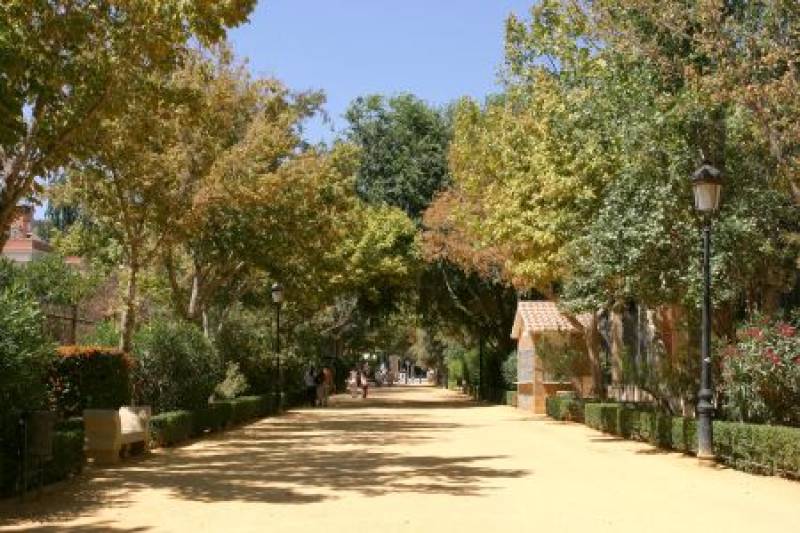 The Alamedas are a series of tree-lined avenues for pedestrians and are the main green area within the city of Lorca. They probably date back to the 18th century and are still very popular among walkers, those meeting friends or even people just looking for a calm spot to enjoy the peace and quiet.
When the English doctor Joseph Townsend published “A Journey through Spain in the Years 1786 and 1787” he described the Alamedas in glowing terms, comparing them with the walks in Oxford in terms of their spaciousness and beauty, and nowadays conscious efforts are made to keep them cool in summer and ensure that the noise of the city does not intrude.
The Plaza de Colón and a coffee stop
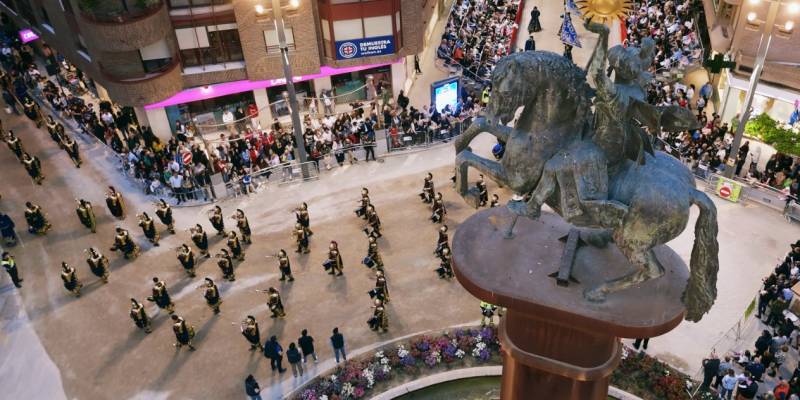 The Plaza de Colón and in particular its monumental fountain constitute another common meeting place, and this is a great place to stop and have a coffee in Expresso, Los Primos or La Chemin de Marie before carrying on with the afternoon.
The Teatro Guerra
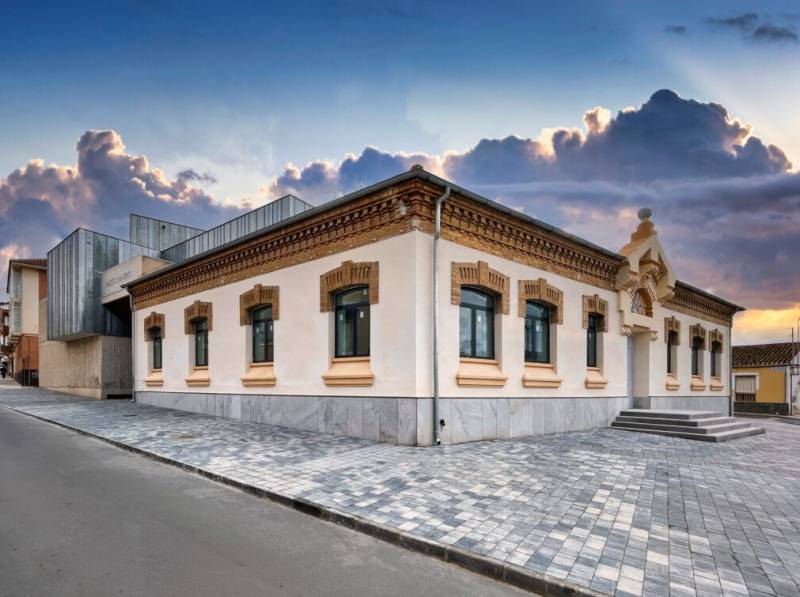
As the afternoon draws to a close the area around the Teatro Guerra begins to liven up. The building itself was created in the Spanish Elizabethan style, named after Queen Isabel la Católica, who reigned with her husband Fernando from 1474 to 1504. The seating is arranged in a horseshoe shape and can hold an audience of up to 518, while on the outside, the façade with red stones, white cornices and a stone base is decorated with four statuesque busts representing Tirso de Molina, Lope de Vega, Calderón de la Barca and Moratín.
Close by, the terraces of cafés and restaurants like the 1900 are ideal for a snack as you rest your legs after the afternoon walk!
End the day with a treat for the tastebuds
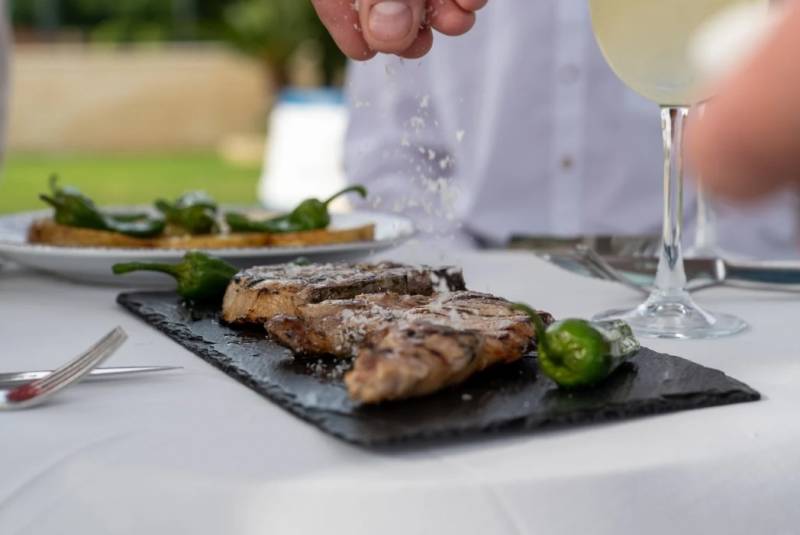 Finally, it’s time for dinner! One preferred option is La Casa de los Musso, right in the heart of the city and superb food – the name comes from the historic building in which the original inn was located on the corner of Calle Álamo and Calle Corredera, a perfect spot to end the day with a final stroll through the historic wealth of Lorca.
And there end the recommendations of the regional board – but we haven’t even mentioned the numerous historic churches in the centre, the fascinating local archaeological museum, monuments like the Roman milestone, the Porche de San Antonio (one of the original gates of the medieval city wall), the superb Palacio de Guevara…. the list seems to be endless!
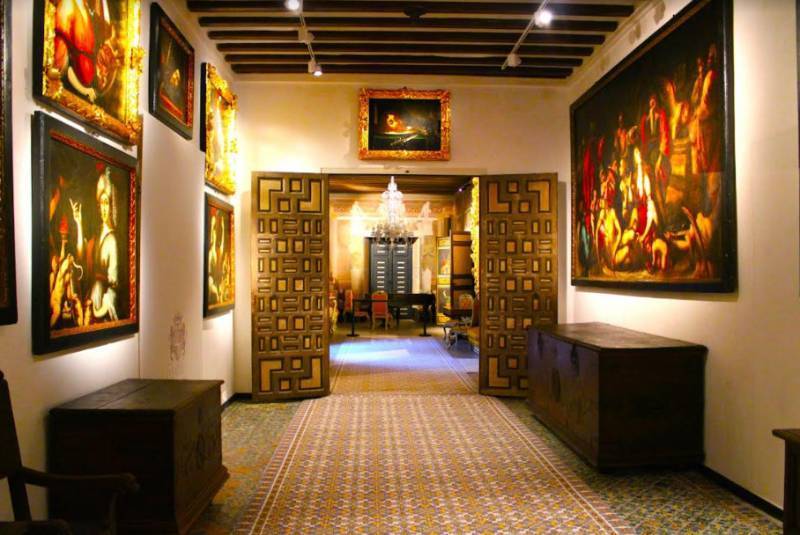 The truth is that it is hard to do justice to Lorca in just one day, but if you are set on curtailing your visit already then you have plenty of reasons to return!
On the other hand, this first experience might lead you back to the promotion being offered by the local council – spend the night in a hotel and continue your visit the following morning with one of the free guided tours you’re entitled to as a reward!
For more information and recommendations don’t hesitate to contact the local tourist office, located next to the entrance to the Palacio de Guevara (telephone 968 441914, email lorcaturismo@lorca.es).
Source: ITREM
Images: ITREM, Ayuntamiento de Lorca, Murcia Today
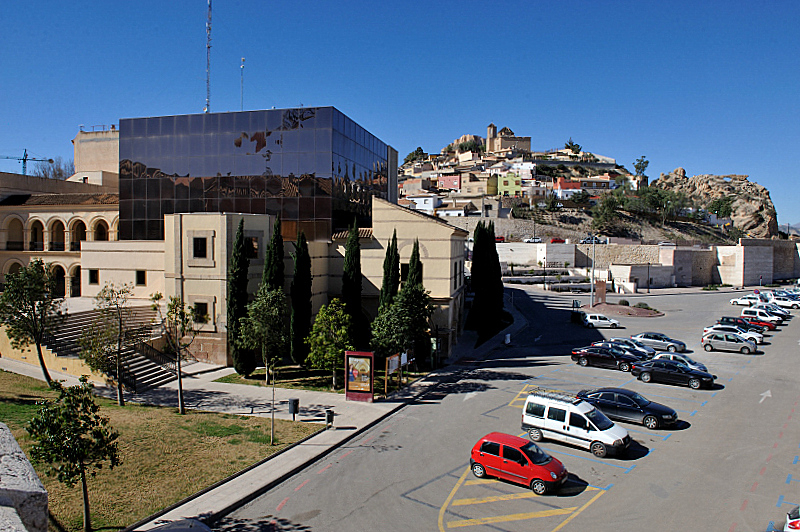
The rich and extensive history of Lorca has left a legacy of archaeological sites and historic buildings around which the modern city has built its tourism industry. Amongst these are Lorca Castle, Plaza de España, the former Collegiate church of San Patricio, the municipal archaeological museum, the Casa Huerto Ruano, the Palacio de Guevara and the churches and convents of San Francisco, San Mateo, the Virgen de las Huertas, La Merced, El Carmen and many others.
Unfortunately, Lorca has been prone to natural disaster, suffering a severe flood in 1973 which killed 50 people, and a Gota Fría on September 28th 2012, as well as a series of earthquakes, the most recent of which was 5.3 on the Richter scale on 11th May 2011 and claimed 9 lives.
 Lorca also has an area of unspoilt coastline incorporating the Parque Regional de Cabo Cope - Puntas de Calnegre, which includes the beaches of Puntas de Calnegre, Cala Calnegre and various others. Although only one is accessible by road others can be reached along dirt tracks!
In terms of fiestas, Lorca is synonymous with Easter (Semana Santa), its biblical parades of International Tourist Interest status being famous throughout Spain. The week includes a series of parades in which the whites (Paso Blanco) and blues (Paso Azul) try to outdo each other with the magnificence of their embroideries and the skill and daring of their horsemen.
In the Autumn Lorca also celebrates the Fiestas of San Clemente and a Feria and there are a series of important events throughout the year in the Recinto Ferial, as well as a busy cultural and sporting programme.
The tourist office relocated for 14 years to Calle San Patricio, near the church, but has now returned to its former premises alongside the Palacio de Guevara in the Plaza Concha Sandoval, or Plaza de la Bordadora (click for map).
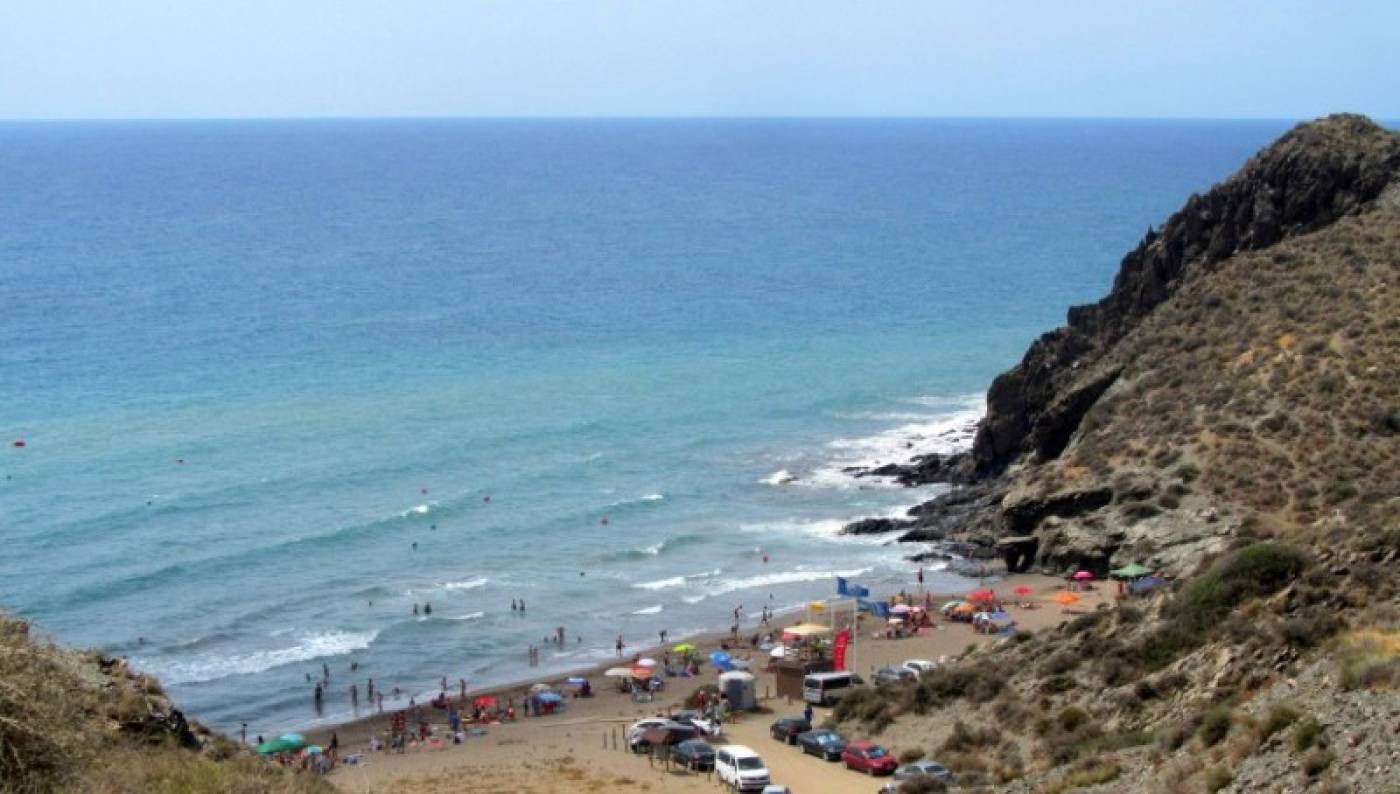 Lorca also has an area of inspoilt coastline incorporating the Parque Regional de Cabo Cope - Puntas de Calnegre, in the Sierra de Almenara, which includes the beaches of Puntas de Calnegre, Baño de las Mujeres, San Pedro, El Siscal, Cala Honda, Cuartel del Ciscar, Junquera, Cala de la Gruta, Cala Leña, Los Hierros, Cala Blanca and Playa Larga, although many are accessible only along difficult tracks or by boat!
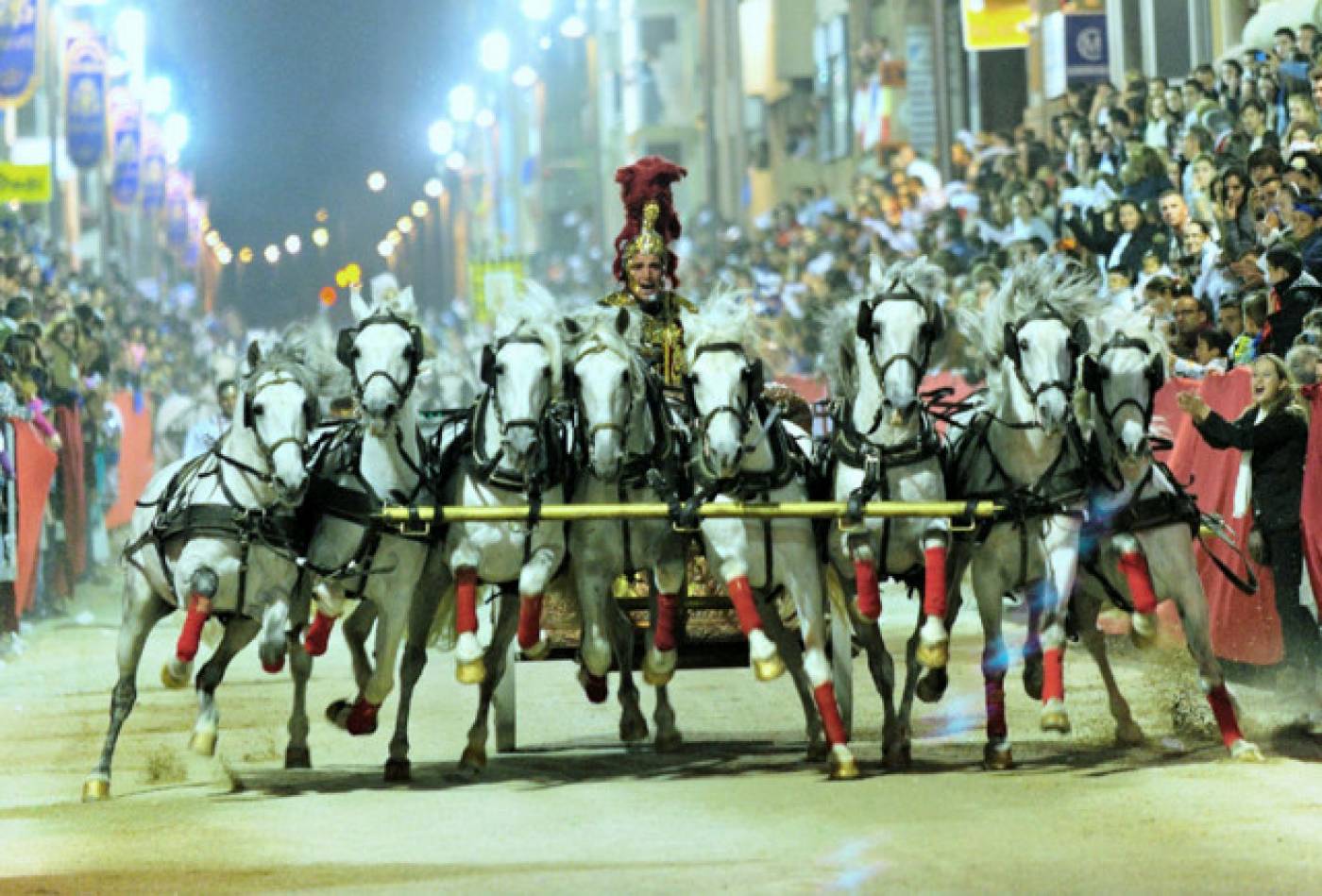 However, in spite of its many attractions, the name of Lorca is synonymous with Easter, (Semana Santa) its biblical parades of International Tourist Interest status and famous throughout Spain. The week includes a series of processions in which the Whites (Paso Blanco) and Blues (Paso Azúl) try to outdo each other with the magnificence of their embroideries and the skill and daring of their horsemen.
Lorca also has a Parador hotel, located within the historic castle.
Every day of the year apart from 1st and 6th January and 25th December, 10.00 to 14.00 and 16.30 to 18.30 (except Sunday afternoons).
These opening times are often extended and other information points created during the Semana Santa celebrations.
For more local news, events and visiting information go to the home page of Lorca Today