










Spanish News Today Editors Roundup Weekly Bulletin April 17

TOP STORIES: "Flying to Spain? You now need to arrive at the airport 3 hours early" & "Rising fuel costs are pushing more drivers towards electric cars"
Negotiations in the Middle East look to be taking a genuinely positive turn as a10-day Israel-Lebanon truce is called from this Friday, which was one of the sticking points of the original ceasefire between the US and Iran. And yet, the long-ranging side effects of this war continue unabated, most notably in the seemingly unstoppable rise in fuel prices.
This is affecting everything from petrol at the pump, which is making Spanish drivers reconsider their position on electric vehicles, to jet fuel, supplies of which airline bosses say could be running out sooner than expected. And that’s not the only trouble at airports recently, as the introduction of Europe’s Entry/Exit System at long last has been troubled, to say the least. Read on for more…
Longer queues in European airports
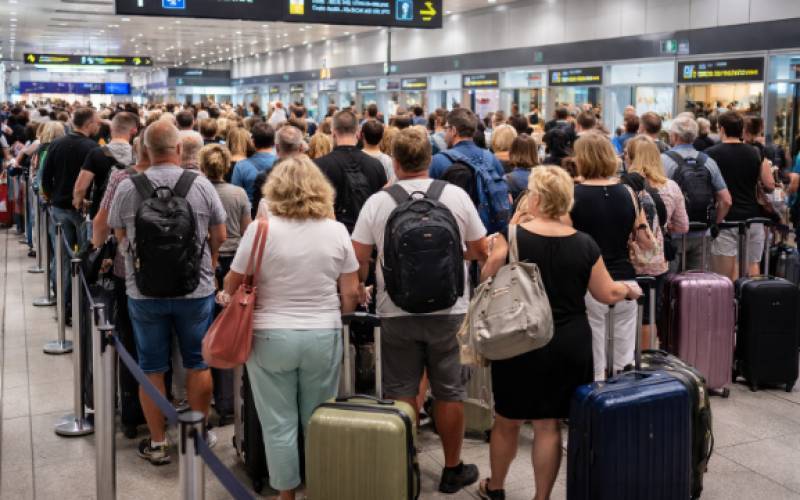
If you are heading between the UK and Spain any time soon, it may be worth adjusting one long-standing habit: turning up at the airport with just enough time for a coffee and a quick browse in the duty free. That’s because the EU’s new Entry/Exit System, or EES, has arrived, and early signs suggest it has not exactly been a smooth landing.
The system, which had already been slowly rolled out in many places over the last few months, became official policy across the Schengen area on April 10. What it does is effectively replace passport stamps with a digital record of every entry and exit, and it also adds biometric checks into the mix, meaning fingerprints and a facial scan for all non-EU travellers. In other words, British passengers now get the full process every time they cross the border.
In theory, the EES is supposed to be all about efficiency and security, but in practice, the opening week of the now-mandatory system showed there were significant teething problems to overcome, mainly due to how long it all takes.
At Milan Linate airport, for instance, more than 100 passengers missed an easyJet flight to Manchester after getting stuck in the passport control queue. Despite the bad publicity and high-profile of the incident, the affected passengers were left to sort out new flights and cover the cost themselves, a sharp reminder that airlines still consider getting to the gate on time very much the passenger’s responsibility.
And Milan does not appear to be an isolated case. Reports from across Europe suggest queues stretching to several hours at peak times, with airports in France, Germany and – yes – Spain all feeling the strain.
Air travel industry bodies have been quick to raise concerns, warning that if this is how the system behaves before the full summer rush, the coming months could prove difficult to manage. The flip side to that, of course, is that between now and July when everyone floods to their place in the sun for two weeks, we’ve got a good three months to work out all the kinks in the system.
Indeed, the European Commission maintains that the system is working well in most places, with an average processing time of just 70 seconds per passenger – much faster than a border security guard or police officer.
Airport operators, however, suggest it can take considerably longer, particularly when you factor in people unfamiliar with the process, families travelling together and the inevitable technical hiccups that come with any new system.
The deadline for the EES to become the norm across all Schengen borders had already been pushed back from last October, when it began to be introduced on a non-obligatory basis
Since then, more than 52 million entries and exits have been registered in the Schengen zone, as well as more than 27,000 refusals of entry. Of those, nearly 700 people were identified as posing a security threat. So something seems to be working.
Always up for a scrap, Ryanair’s feisty CEO Michael O’Leary described the week’s events as “a shit show and a shambles”, and suggested that the full introduction of the EES should be further postponed until October of this year.
The odds of that seem low: the genie is out of the bottle now, and we’d do best to try to make the system work instead of backpedalling. Ultimately, though, that’s a decision and a process for the airports to sort out, but what if you’re a passenger innocently trying to make your way through the airport?
Well, if you’re going to be flying to or from Spain any time soon, you should prepare for the airport experience to take longer than it used to, just in case. Each passenger has to go through the biometric registration individually, which adds time even in the best-case scenario.
The practical advice is not complicated, but it does require a bit of forward planning. Arriving at least three hours before departure is now the baseline, instead of the oft-touted golden rule of two hours. If you are travelling with children or in a large group, allowing even more time would not be excessive. And, naturally, making sure your passport and documents are ready, checking transfer times in advance and understanding exactly what your travel insurance does and does not cover are all basics that apply to any overseas travel – EES or no EES.
Above all, a degree of patience is required. Just because this is a system that has been years in the making doesn’t mean that it will run smoothly from Day 1. Airport staff and passengers alike are still getting used to it, and that learning curve is happening in real time.
For now, the safest approach is to assume that everything will take a bit longer than you expect, and than it used to. It may not be ideal, but it’s a lot better than watching your flight leave without you.
Here comes the summer sun
If you do manage to get into Spain any time in the next few months, remember to pack extra sun cream as the country could be heading for a scorcher of a summer this year, according to meteorologists, who warn that a “super El Niño” may be on the way.
The experts are saying there’s now a 61% chance of this powerful climate event developing, which could mean hotter and more persistent heat across much of the country.
El Niño happens when sea temperatures in the tropical Pacific rise by at least half a degree above normal, disrupting global weather patterns. A “super Niño”, though, takes things up several notches, with temperatures more than two degrees warmer than average and far greater knock-on effects around the world.
According to meteorologist Mar Gómez, the current shift from the cooler La Niña conditions to something warmer is well underway and “more likely to happen and could be much more intense”.
Spain’s link to El Niño isn’t always direct, but it often encourages warm air from North Africa to drift north, resulting in longer spells of sunshine and, more worryingly, bouts of intense heat that stick around.
While northern areas of Spain can sometimes catch a break during these hot summer episodes, mainly thanks to the occasional Atlantic cold front, the south and centre of the country are likely to feel it most this coming summer. And with these early spring days already reaching 30ºC (and above forecast for the beginning of next week!), we may just be getting a cheeky little taster of what’s coming.
And yet, at the same time it’s true that forecasts like this are based on probability and are not certain fact. We all know that the weather often has a mind of its own. Still, with the ingredients for a hot summer coming together, it’s worth keeping an eye on local forecasts and planning ahead for the rising temperatures. How do you plan to deal with the heat when it comes?
Fuel to the fire
Aside from the searing heat and entry/exit problems, Spain’s summer holiday season could be heading for a serious wobble and it all comes down to what’s happening thousands of miles away in the Strait of Hormuz. Airlines and airports across Europe are starting to sound the alarm, warning that jet fuel supplies could run out within weeks if the situation in Iran doesn’t ease.
As we now all know, that narrow stretch of water normally handles about 20% of the world’s oil traffic so when it closes, the knock-on effect is huge. Now it’s starting to hit aviation, right at the worst possible moment as millions of people get ready to pack their sunscreen and flip-flops.
Airports group ACI Europe has already written to the EU warning that shortages could become a reality if shipping through the strait doesn’t return to normal ASAP, but that really doesn’t seem likely to happen any time soon. According to the organisation, if the disruption continues, jet fuel shortages across Europe could follow within weeks.
Obviously, the airlines are watching the situation closely and, as per usual, Ryanair has been one of the first to pipe up. Fan favourite Michael O’Leary is back again, explaining that there is no immediate disruption, but warned that things could start to bite in May and June if the conflict drags on. He also put a figure on the risk, saying there’s a chance that between 10% and 25% of fuel supply could be affected during that period.
For Spain, the timing could hardly be worse. The country depends heavily on tourism and the busiest months are just around the corner. Most visitors arrive by plane, so even limited disruption could ripple quickly through hotels, restaurants and coastal resorts just as the season gets going.
For now, airlines still have reserves and flights are operating as normal, but there is a definite sense that the clock is ticking. If nothing changes in the next couple of weeks, this could turn from a warning into a real problem.
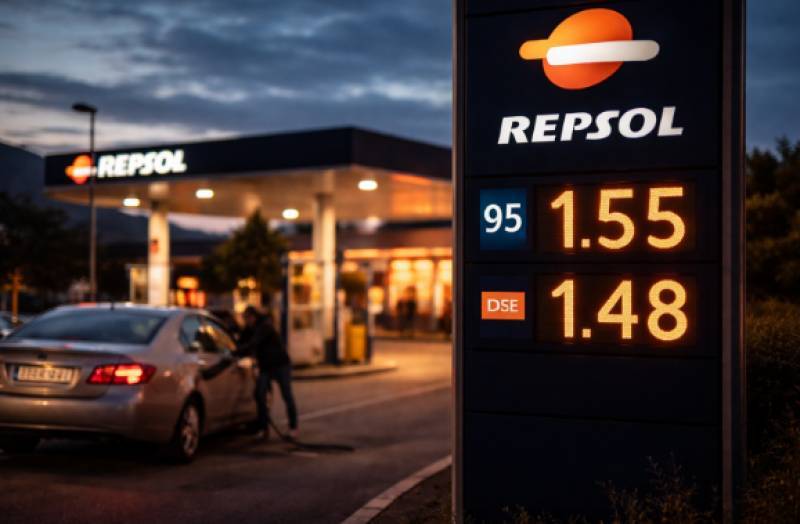
That same conflict is already being felt in a much more immediate way for drivers in Spain, with fuel prices climbing sharply and changing the maths of everyday motoring. Petrol is now sitting at around €1.56 a litre, up seven cents since late February, while diesel has jumped far more dramatically to €1.89.
That gap is starting to make electric cars look far more appealing. Charging at home for 100 kilometres can cost as little as €1.50 to €2, compared with €8 to €12 for petrol, according to industry figures. In simple terms, running a traditional car can now be up to five times more expensive.
There’s still a major sticking point though. Spain’s charging network has grown to more than 55,000 points, but around 17,000 are not working or not yet connected. That’s a big gap if more drivers are going to make the switch and it’s something the industry will need to fix quickly if momentum is going to continue.
Back at the bigger picture level, Brussels is now stepping in as the economic impact of the crisis spreads across Europe. Ursula von der Leyen has confirmed that the EU has already spent an extra €22 billion on fossil fuels in just 44 days of conflict, with no increase in supply to show for it.
She explained that even if fighting stopped immediately, disruption to energy markets wouldn’t disappear overnight. The European Commission is now preparing a package of emergency measures aimed at coordinating how member states respond, particularly when it comes to building up gas reserves ahead of next winter.
There are also discussions around releasing oil reserves if needed, as well as giving governments more flexibility to support struggling sectors. At the same time, Brussels is warning countries to be careful with short-term fixes like fuel tax cuts. I think they’re looking at you there, Spain.
Spain’s decision to reduce VAT on petrol and diesel from 21% to 10% has already been flagged as something that needs close monitoring. Valdis Dombrovskis has made it clear that measures like this should only be temporary, even if they do provide quick relief.
And Spain is definitely feeling the pressure. Inflation has jumped to its highest level since 2014, driven largely by rising fuel costs, but also by increases in electricity, clothing and other everyday essentials.
The government moved quickly in March with a €5 billion support package for households and more than €2 billion in loan guarantees for businesses. It includes tax breaks and targeted help for sectors like transport, which are being hit particularly hard.
Officials believe the measures could trim inflation slightly over the next few months, but critics are not convinced it goes far enough. Trade unions are calling for stronger action, including free public transport and more direct financial support for lower-income households.
There’s also pressure from opposition groups and consumer organisations, especially as warnings from Brussels continue to highlight how serious the situation could become. Forecasts suggest inflation could reach around 4% in the coming months, with some estimates even higher if the conflict drags on.
For now, the message from both Madrid and Brussels is that more measures could follow if needed. Spain has been here before during previous crises and rolled out multiple rounds of support, so this is unlikely to be the last word.
Murcia
Now let’s take a look at what’s been happening across Murcia this week. We’ll start down on the coast, where one of Murcia’s seaside towns is once again in the spotlight. As temperatures start to rise and those first warm, spring-like days get people thinking about the beach again, attention naturally turns to some of the best coastal spots in Spain. Around this time of year, magazines such as National Geographic begin highlighting top destinations, and it’s no surprise that the Region of Murcia, with its beautiful coastline, often features.
This time, the town in question is Águilas, which has been nominated in the ‘Best Beach Destination in Spain’ category as part of National Geographic’s Readers’ Awards, placing it alongside well-known coastal areas from across the country.
In total, seven places are competing in the category, including Calvià, Costa de Ferrol, Torroella de Montgrí, Orihuela, Llanes, L’Ametlla de Mar and, of course, Águilas.
Águilas was chosen for its coastline near Cabo Cope and the Sierra de Almenara, an area known for its beautiful beaches and hidden coves. The final results will be announced later this month, but for Águilas, the nomination alone once again puts it firmly on the map as one of the Region’s standout coastal destinations.
And with more people looking towards Murcia, there’s also been some long-awaited progress when it comes to actually getting here. The usual daily bus services to Corvera airport from Murcia and Cartagena, which start up each summer season, have now been launched.
 Starting this week, passengers travelling from Murcia city have 10 daily departures to choose from, with nine return services from the airport, while the Cartagena route will run eight daily departures in each direction. Both services will operate seven days a week, connecting directly with the main bus stations in each city.
In total, that’s 238 weekly trips, compared to just 12 under the previous limited schedule, and with a flat ticket price of €1.85. The expansion has been brought forward by three months, with regional officials making improved airport connectivity a priority.
That said, it still doesn’t quite match the flexibility of private services like Airport Buses, which continue to run routes through urbanisations, golf resorts and coastal towns, often timed directly with flight schedules.
To football now, and Real Murcia is looking to move its training base to Condado de Alhama from the 2026/27 season, after spending much of this year training across multiple locations in the Region.
So far this season, the squad has moved between San Pedro del Pinatar, La Torre, Mula, Cehegín, Callosa del Segura and the University of Murcia, something that has made planning difficult and meant constant changes in pitch surfaces.
The proposed base in Condado de Alhama will hopefully solve that, with plans for two full-sized pitches, changing rooms, gym facilities and storage space, all managed by Pinatar Arena Football Centre. It won’t replace the club’s long-term plans for a permanent complex in Murcia city, but it should provide a much-needed fixed base in the meantime.
And while that’s about improving consistency on the pitch, over in Los Alcázares the focus is on something much bigger. They are tackling a problem that has affected the town for years. The Spanish government has now given the green light to the long-awaited flood prevention plan centred on the Rambla de la Pescadería.
 The project involves reconditioning the channel so it can direct excess rainwater towards the Mar Menor during periods of heavy rainfall, helping to reduce the risk of the flooding that has repeatedly hit the town over the past decade.
The first phase, with a budget of just over €14 million, will involve creating a 1,250-metre open channel alongside Avenida Fernando Muñoz Zambudio, a major piece of work that will also require changes to roads and existing services.
A second phase, estimated at around €18 million, will include the creation of a 30-hectare floodable green area designed to absorb excess water while also improving public space.
It’s being seen as a major step forward locally, although officials are clear that it’s just part of a larger solution that will still take time.
And finally in San Javier, a smaller change made the headlines this week, but one that could make a real difference, with the municipality leading the way in waste management across the Region: San Javier has become the first of Murcia’s 45 municipalities to fully roll out the new brown bins for organic waste, adding a fifth recycling category to the existing system.
Around 400 containers have already been installed, and in March alone, more than 200 tons of organic waste were collected. The project has been supported by a public awareness campaign reminding residents that separating waste is no longer optional, but a requirement as Spain moves towards a more circular economy.
The bins are designed for everyday organic waste such as food scraps, coffee grounds, eggshells and small garden waste, with compostable bags recommended for use, not the most exciting and glamorous news, but important nonetheless.
And so, from rubbish to… well, hopefully something less rubbish: what’s on for you to do around the Region of Murcia this week. Well, there’s a spring market you can visit in the Alhama de Murcia village of El Berro on Saturday, or a free concert by Sonrisas Harmony A Capella Chorus in Cartagena that same evening, while on Sunday there is a full day of rock, rap and reggae music in La Manga, complete with a giant paella cooking, a market to browse and a charity raffle, or for something a bit slower paced, you can join a mass dog walk to the Playa de la Higuericas in Pilar de la Horadada on Sunday morning.
For more events coming up soon in the Murcia area, check out our EVENTS DIARY:
Spain
From one of the world’s rarest wild cats to one of conservation’s biggest success stories, the Iberian lynx has made an incredible comeback in Spain and Portugal. Twenty years ago there were fewer than 100 left in the wild. Now there are 2,401, and for the first time populations on both sides of the border are mixing freely.
This incredible turn-around has been built over years of careful breeding programmes, reintroductions and, crucially, the creation of wildlife corridors that allow lynx to move naturally between regions and even countries. What started as small, controlled efforts has gradually turned into a connected network stretching across parts of Andalucia, Castilla-La Mancha, Extremadura and Murcia, as well as southern Portugal.
The first real signs that it was working came in 2019, when lynx began moving independently around areas like Mértola and the Algarve. Since then, those movements have expanded, helping different groups to interbreed and strengthening the species overall.
Funding from the EU’s LIFE programme has played a big part, but so has local support. Farmers, hunters and residents have been brought into the project through awareness campaigns, school activities and even public art, helping to shift attitudes and protect habitats.
Spain now accounts for 2,047 lynxes, with the largest populations in Castilla-La Mancha and Andalucía. Portugal has reached a record 354. It’s a huge leap forward, although conservationists are quick to point out that the work is not finished, especially with possible cuts to EU environmental funding on the horizon.
From wildlife to wildfires, it’s also been a busy start to the year for Spain’s emergency services, and definitely not in a good way. Nearly 13,000 hectares of rural land have already burned in the first three months of 2026, more than double the figure from the same period last year.
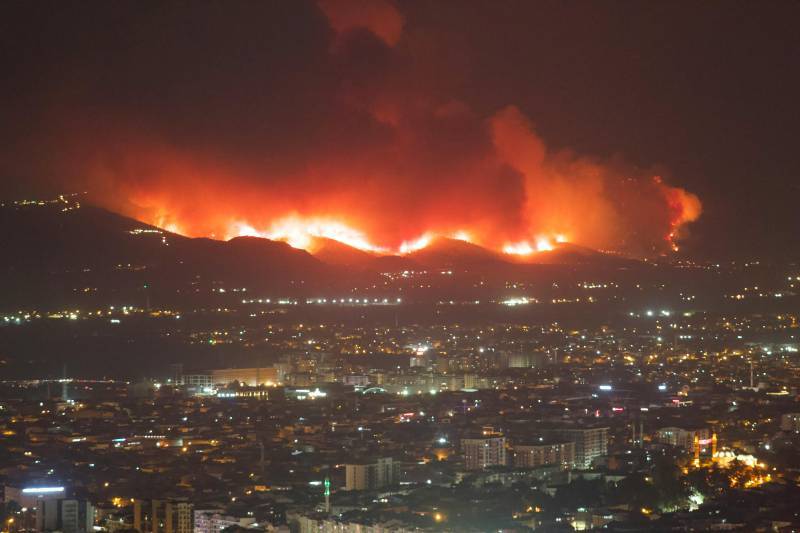
Believe it or not, this is not the worst start to a year on record and remains below the ten-year average, but it still puts 2026 among the more difficult recent seasons so far. A total of 1,568 incidents have been recorded, although most have been small and, importantly, there have been no major fires yet.
The northwest of the country – around Galicia, Asturias and Castilla y León – continues to take the brunt of the damage, accounting for the majority of incidents and burned land. Large areas of scrubland, pasture and woodland have already been affected, which raises concerns about what could happen once the hotter months arrive.
With summer still ahead, attention is already turning to prevention and preparedness, especially in regions that have been hit hardest in the early part of the year.
And finally, in the Castilla province of Soria, one tiny village is taking a very hands-on approach to its own survival. Arenillas, home to just 40 registered residents, is offering a free house and a full-time job to families willing to move there permanently.
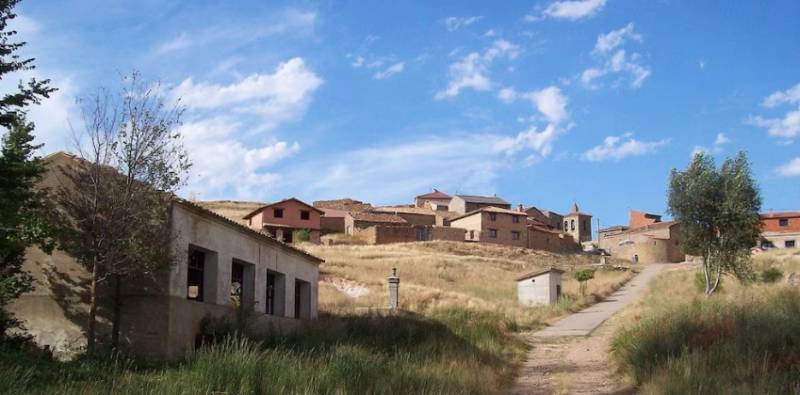 The deal is simple enough. A fully renovated home with no rent, a steady job maintaining local buildings and free school transport for children to nearby Berlanga de Duero. It’s all aimed at attracting families with school-age kids and bringing life back into the community.
Unsurprisingly, it has caught people’s attention. More than 116 families applied within a week of the offer being announced, according to the local council.
The initiative is being run by the village’s cultural association alongside the council, with support from the Castilla y León regional government. There is even the option of helping run the local bar, which residents say is at the heart of village life.
Like many parts of inland Spain, Arenillas is part of what is often called Empty Spain, ‘La España Vaciada’ – areas that have been steadily losing population for decades. The village still fills up in summer when former residents return, but the aim now is to build something more permanent and keep the community going all year round. Fancy it?
Alicante
In Alicante, the province’s airport has just recorded its busiest March on record, with more than 1.6 million passengers passing through in what is still technically the off-season.
Growth is running at more than double the national average, and British travellers remain comfortably in the lead, accounting for over half a million of those travellers in a single month. That level of traffic helps explain why Alicante now sits as Spain’s fourth busiest airport, behind only Madrid, Barcelona and Málaga.
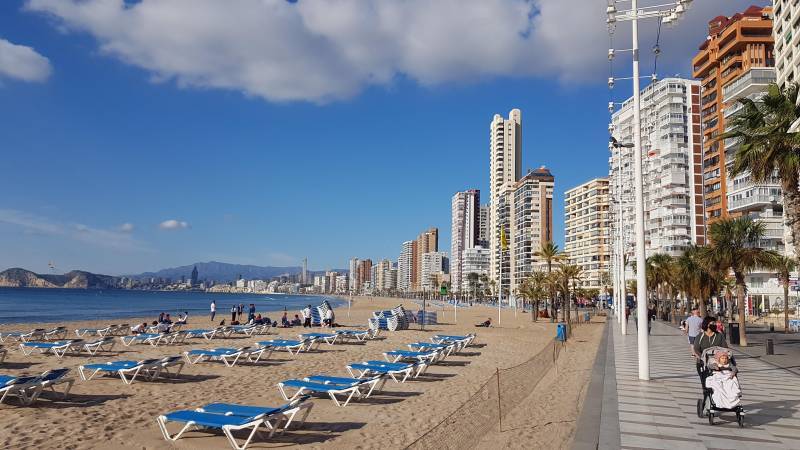 It also feeds directly into what is happening on the ground. Tourism across the Valencian Community is firmly on an upward trend, and is also becoming more valuable. Foreign visitors are spending more per day than they were a year ago, and in places like Benidorm, that figure is particularly striking.
At nearly €185 per person per day, the city is leading the region for visitor spending, comfortably ahead of larger cities. The profile of tourists is shifting too. Sun and beach holidays still dominate, but they no longer account for the majority of trips, with cultural and sports tourism slowly gaining ground.
All of which helps explain why the property market is also showing little sign of slowing down. Alicante has now firmly established itself as Spain’s third largest real estate market, with only Madrid and Barcelona ahead of it.
More than 53,000 property sales in 2025 underline just how active the sector remains, with towns such as Torrevieja, Orihuela and Alicante itself all featuring among the country’s busiest municipalities for transactions.
Meanwhile, just inland from the Orihuela Costa this week, the Sierra Escalona has moved a step closer to becoming an officially protected Natural Park. The approval of its Natural Resources Management Plan is a key milestone, setting out how the area’s forests, wildlife and open spaces will be preserved in the long term.
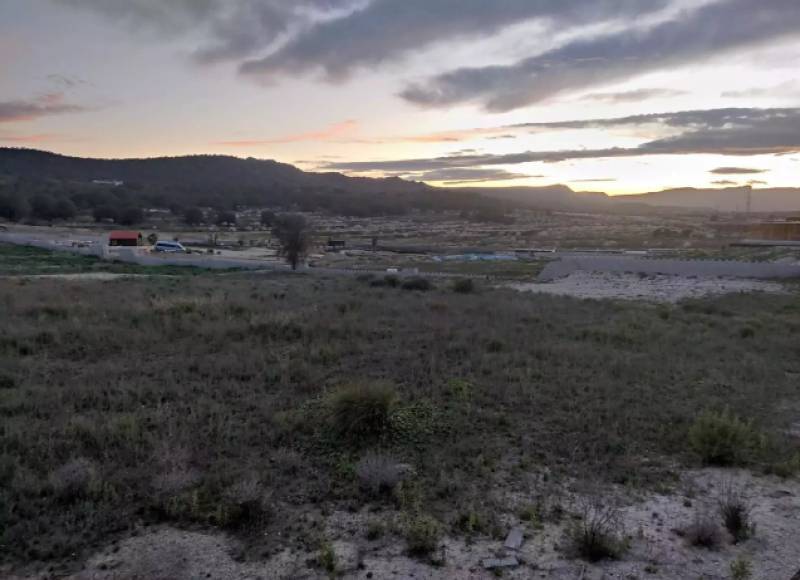
It is a significant development, not just environmentally but economically. Protected status tends to bring a different kind of investment, one focused more on sustainability than rapid development, which would be welcome considering how often construction and the desire for more growth and income all too often take precedence over preserving our natural heritage.
If anything, the latest step towards protecting the Sierra Escalona suggests a growing recognition that the landscape itself is part of the appeal, and not something that can be taken for granted.
And that point was underlined rather starkly this week when a forest fire flared up in the Sierra de Orihuela, which kept emergency crews working through the night before being stabilised in the early hours. The blaze broke out in a hard-to-reach area near Montepinar, forcing firefighters to tackle it on foot without aerial support.
In the end, it was brought under control swiftly and without causing any injuries, thanks in part to coordination between multiple services and local residents who helped guide teams through the terrain. Investigators are still looking into the cause of the fire, including the possibility that a lightning strike a few days earlier may have played a role.
Andalucía
 Two pupils from The British School of Almería have done something rather extraordinary, securing the best exam results in the world and across Europe in their respective subjects.
Jimena, in Year 11, achieved the highest mark in the world in her French exam within the Cambridge IGCSE programme, while Ana, in Year 12, earned the highest mark in Europe for Business and the highest mark in the world for English Literature under Pearson Edexcel.
The school said it was proud of the pupils’ “extraordinary academic achievements,” and the figures back that up nicely. In all, 92% of students at the school achieved grades between 4 and 9 in their IGCSEs, with 43% landing in the highest band. That’s about 20% better than the average of UK schools – an impressive result for the school in Roquetas del Mar! And massive congratulations, too, to Jimena and Ana.
However, while the youth were excelling, some older Almería stalwarts have had a harder time of it. A 100,000-year-old fossilised dune at the Playazo de Rodalquilar beach on the Cabo de Gata has been defaced with graffiti. The phrase ‘Playa naturista’ was sprayed in blue across one of the area’s most distinctive geological features on Sunday April 12.
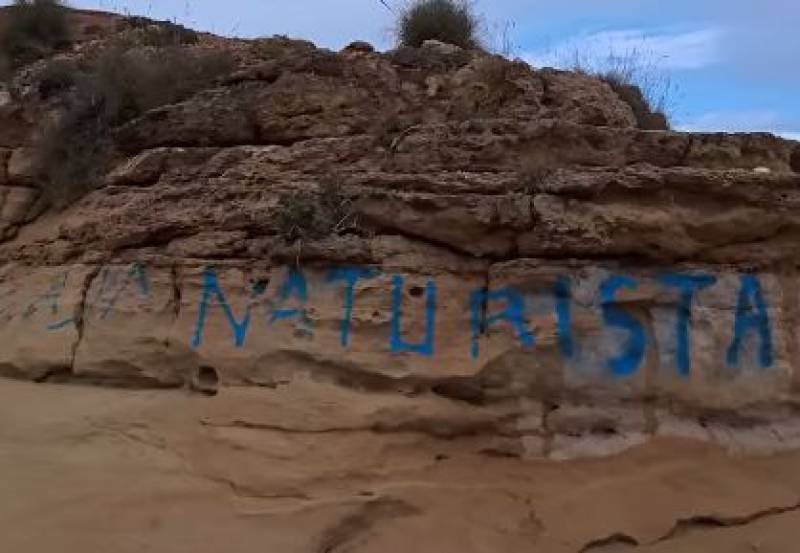 The damage has sparked concern among locals and those who value the protected landscape. David Valverde, a diving instructor known as David “Chanquete,” called it “a damn disgrace” and said damaging part of a protected area like this is simply unacceptable.
The dune is considered important both scientifically and visually, and any repair work will need careful handling to avoid causing further damage. Authorities have repeatedly warned about respecting the environment in the park, where littering, unauthorised access and graffiti remain recurring problems.
In Cádiz, there was a fire scare at Navantia on Tuesday afternoon when flames and thick smoke were seen coming from the cruise ship Harmony of the Seas. Thankfully, the incident was quickly brought under control and did not go any further.
According to sources at Navantia, the fire began during interior renovation work near the funnel, carried out by subcontractors working for Royal Caribbean. The shipyard’s fire protocol was activated immediately, and the quick reaction prevented what could have become a much more serious incident.
Harmony of the Seas is currently in dock 4 for a major refurbishment, with more than 1,200 workers involved in the project. The vessel entered the shipyard on April 3 for work that includes a new casino, specialty restaurants and a refreshed pool deck, before returning to service on May 21.
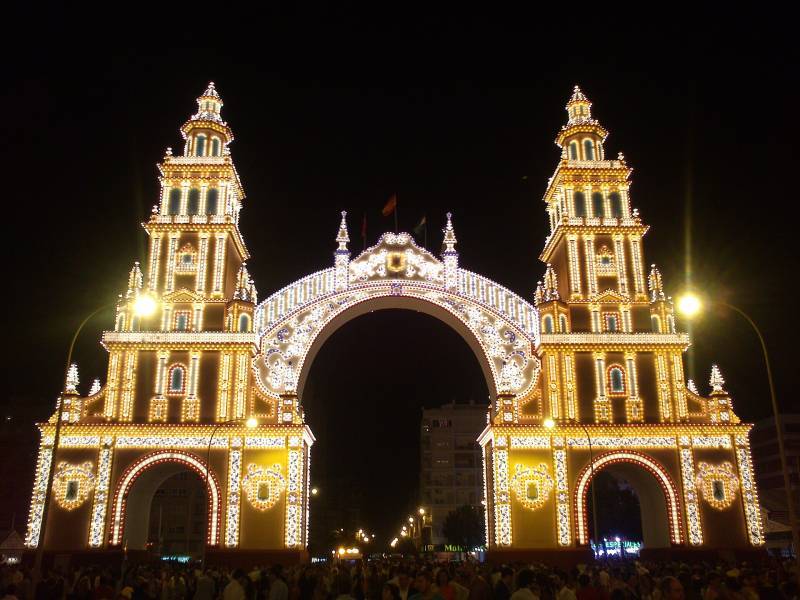
And finally, Seville is already putting on a show ahead of its famous Feria de Abril, with the city preparing one of the event’s most anticipated moments, the switch-on of the fairground lights. The pre-opening celebration will begin two hours before the official lighting ceremony at midnight, and will feature Raya Real, who will provide the music, marking four decades on stage.
Delegate for Major Festivals Manuel Alés said it is “an honour to have this legendary group performing on Monday”, adding that the city hopes the evening will launch the week “in grand style”.
Then, once the clock strikes midnight, more than 28,000 LED lights will illuminate the fairground entrance, and that familiar burst of colour will signal that Seville’s great spring celebration is properly underway.
You may have missed…
- Spain to launch 400 prefix to help spot spam business calls.
From October, all business calls in Spain will have to use a new 400 prefix, which should make commercial calls easier for people to identify and to bring more transparency to spam calls. - Stress testing: Dozens of lorries park on new Alhama de Murcia AVE bridge to test its durability.
Striking images have surfaced this Friday of lorry load testing on the Murcia-Almería line to check the strength of a new viaduct as work continues on the Mediterranean Corridor. - Young Alicante doctor loses leg in shark attack while on honeymoon.
A 31-year-old doctor from Alicante is fighting for his life in a hospital in the Maldives after being attacked by a shark during his honeymoon. - Illegal Botox clinic raided in Pilar de la Horadada as police smash cosmetic treatment network.
A clandestine cosmetic clinic and an illegal drug storage facility in Pilar de la Horadada were among the targets of a major Guardia Civil operation as part of a crackdown on a criminal network offering unregulated Botox and filler treatments. - Lidl is launching a low-cost mobile phone service in Spain to rival the big brands.
Lidl has announced that it’s moving into the telecommunications business! The German supermarket giant has confirmed that it plans to launch a low-cost mobile phone service across 30 countries by the end of this year, and Spain is expected to be among them…
And that’s all for this week’s edition. Thank you, as ever, for reading and we’ll have another for you next week.
¡Hasta luego!