



















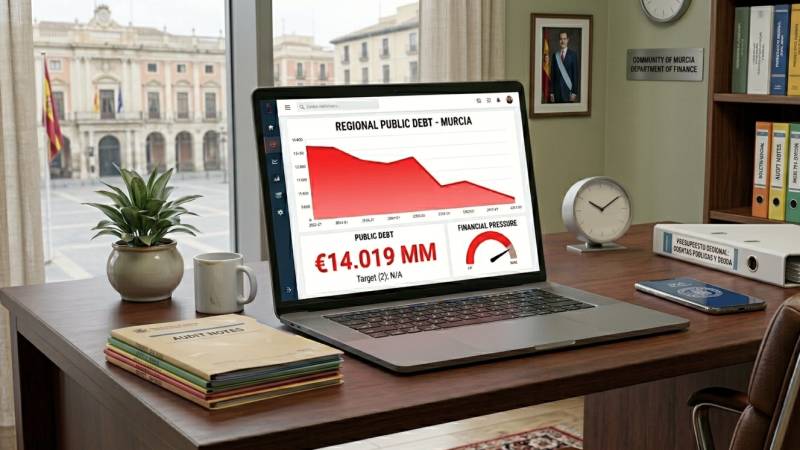
Public debt in the Region of Murcia has climbed past €14 billion for the first time. The latest figures from the Banco de España show it reached €14.019 billion by the end of 2025, continuing a rise that has been building year after year.
The debt now stands at 31.2% of the region’s Gross Domestic Product (GDP), which is the total value of everything the economy produces. That puts Murcia as the second most indebted region in Spain compared to the size of its economy, behind only the Valencian Community. It is slightly below the level seen during the pandemic, but it still gives a clear idea of how stretched things are.
If you break it down, the total would work out at around €8,700 per person based on the current population.
This has not happened overnight. Back in 2008, Murcia’s debt was just €755 million. Since then, it has grown steadily, passing €10 billion in 2020 and continuing upwards to where it is now.
There have been small dips at times, but the overall picture has stayed the same. This is something that has been building in the background for years.
The regional government says the main reason is how Spain’s funding system works. It argues that Murcia receives less money per person than other regions, particularly when it comes to paying for public services like healthcare and education.
Some studies back this up and suggest that underfunding plays a big part in the rising debt. Others are less convinced, pointing instead to spending choices and wider economic issues as part of the story.
There is a proposal from central government to write off part of the debt held by Spain’s regions, although it still needs approval. For Murcia, that could mean cutting more than €3 billion from what it owes, which would make a big difference.
For now, though, the situation remains much the same. Debt is high, and without changes to how regions are funded or how money is spent, it is likely to stay that way for some time.
Image: Archive
Sign up for the Spanish News Today Editors Roundup Weekly Bulletin and get an email with all the week’s news straight to your inbox
Special offer: Subscribe now for 25% off (36.95 euros for 48 Bulletins)
Read some of our recent bulletins:
Discount Special Offer subscription:
36.95€ for 48 Editor’s Weekly News Roundup bulletins!
Please CLICK THE BUTTON to subscribe.
(List price 3 months 12 Bulletins)