Guidelines for submitting articles to San Pedro del Pinatar Today
Hello, and thank you for choosing San Pedro del Pinatar.Today to publicise your organisation’s info or event.
San Pedro del Pinatar Today is a website set up by Murcia Today specifically for residents of the urbanisation in Southwest Murcia, providing news and information on what’s happening in the local area, which is the largest English-speaking expat area in the Region of Murcia.
When submitting text to be included on San Pedro del Pinatar Today, please abide by the following guidelines so we can upload your article as swiftly as possible:
Send an email to editor@spaintodayonline.com or contact@murciatoday.com
Attach the information in a Word Document or Google Doc
Include all relevant points, including:
Who is the organisation running the event?
Where is it happening?
When?
How much does it cost?
Is it necessary to book beforehand, or can people just show up on the day?
…but try not to exceed 300 words
Also attach a photo to illustrate your article, no more than 100kb
PROPERTY SEARCH
article_detail
Date Published: 14/09/2026
More than 4,000 wild animals received help at El Valle Wildlife Recovery Centre last year
ARCHIVED ARTICLE -
The Murcia facility has taken care of more than 34,000 animals since 2019
The El Valle Wildlife Recovery Centre treated 4,393 animals during 2025, an increase of 1,287 on the previous year and a rise of more than 41%. The centre has now treated more than 34,000 animals since 2009, helping injured and vulnerable wildlife recover before returning them to the wild whenever possible.
Birds made up the overwhelming majority of cases last year, accounting for more than 87% of all admissions. Swifts were by far the most common, with 2,323 common and pallid swifts treated at the centre. That was a 135% increase on the previous year.
Among reptiles, the spur-thighed tortoise was the most frequently admitted species, with 292 animals receiving care. The European hedgehog topped the mammal list with 66.
Members of the public played a major role in bringing wildlife to the centre, accounting for almost 80% of admissions. Environmental agents, veterinary clinics and law enforcement agencies also helped to get injured and vulnerable animals into care.
The centre's 12-strong team managed to release 1,356 animals back into the wild during 2025. More than 80% of all animals treated belonged to species included on different protection lists and catalogues.
The number of animals needing help has continued to grow in 2026. By September 8, the centre had already recorded 4,277 live animals admitted, with 4,661 admissions in total.
El Valle also has an important educational role, welcoming 14,155 visitors during 2025. Another 9,400 people visited between January and June this year.
The Regional Government is now preparing a major upgrade of the centre, which has been operating since 1984. A project is being drawn up to modernise the facilities, improve accessibility and make the buildings more energy efficient.
Plans include improvements to the building and outdoor areas, upgraded access points, a new technical support building and modernised reception, treatment and hospitalisation areas. A new specialist area will also be created for hospitalising sea turtles, while existing hospitalisation facilities and the necropsy room will be expanded and improved.
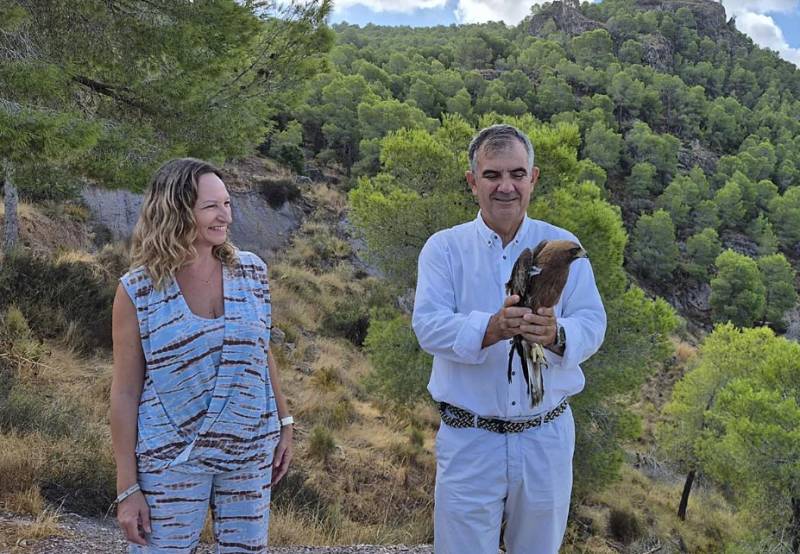
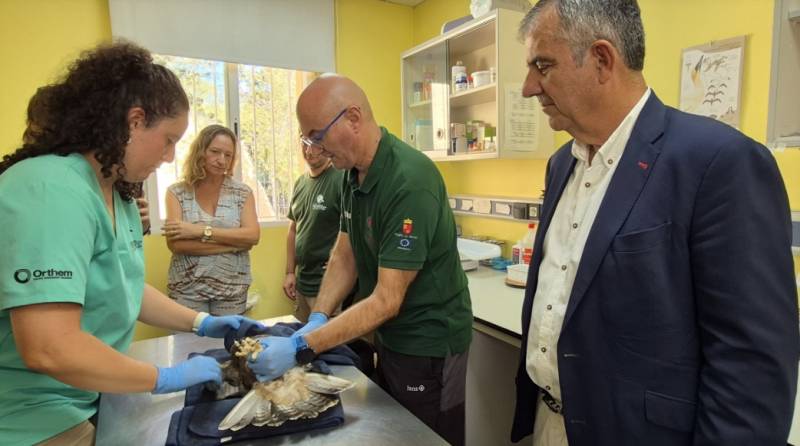
During his recent visit, Juan María Vázquez, the regional Minister for the Environment, took part in the release of a juvenile booted eagle in the El Sequén area, on the northern side of the El Valle y Carrascoy Regional Park near La Alberca.
The eagle had been brought to the centre from Sierra Espuña on September 6 after being found with wet plumage. Following its recovery, it was deemed fit to return to the wild.
Mr Vázquez explained that every successful release represents the combined work of conservation specialists, veterinary staff and those involved in research and biodiversity monitoring.